The Green Monday That Wasn’t
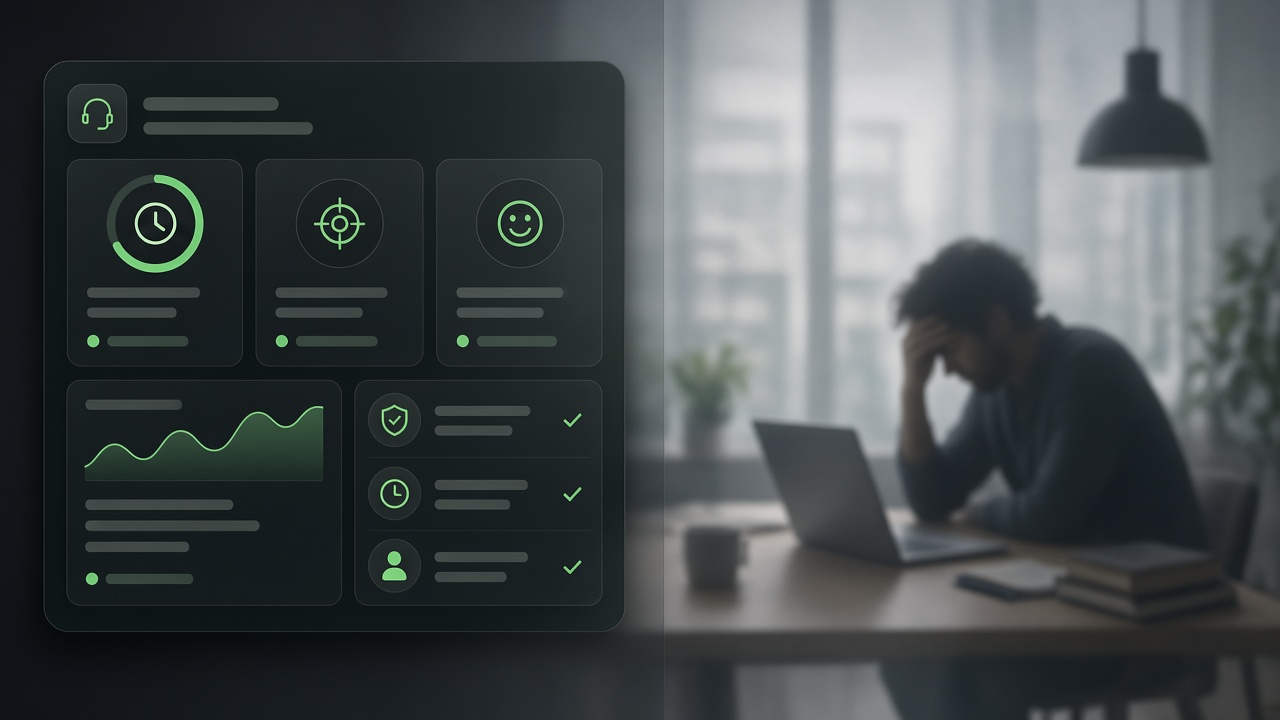
Picture this. It is Monday, 09:12. Your weekly service review is in the diary. Volume is steady. Resolution time is inside target. First-contact resolution looks healthy. CSAT is “acceptable.” The Jira Service Management dashboards you send to senior IT leadership are a wall of green.
Then your phone lights up. A director has been waiting since Thursday for a laptop that “should have been easy.” A finance colleague has opened the same password-reset path three times and still cannot get into a critical system before month-end. A regional manager is polite in the ticket and furious in Teams.
Nobody is wrong about the numbers. The numbers just do not describe Monday morning.
This is the gap between a green SLA and an angry user.
Queue Health Is Not Human Health
I spend a fair amount of time owning workflows and SLAs in Jira Service Management, and reporting volume, resolution time, FCR and CSAT upwards. Those metrics matter. They tell you whether the queue is coping, whether clocks are being respected, whether the desk is closing loops at a sustainable pace.
They do not tell you whether the person on the other end of the ticket had a usable Monday.
FCR can look strong when the first queue touched the issue — even if the colleague still cannot do their job. CSAT can limp along on a survey sent after a polite close, while the lived experience was three contacts, two workarounds, and one apology. SLA clocks stop when the ticket is resolved. Anger does not.
That is the human and DEX angle. Digital employee experience is not “did we hit the timer.” It is “did work feel possible again.” Green on the dashboard and grit in the inbox can live in the same hour. Readers of the Watermelon Effect already know the colour problem; this post is about the service contract that keeps painting over it — SLA, FCR and CSAT looking fine while the person is still stuck.
What Green Quietly Hides
A healthy service desk is not a scoreboard. It is a system that reduces the chance of the same Monday happening again.
When we treat RCA as leadership practice — not a post-mortem ritual — recurring noise drops. In one of the environments I have led, partnering across Network, Security and Engineering on root cause cut recurring incidents on the order of a third. Fewer people explaining the same failure. Fewer “green” tickets that reopen as anger in another channel.
What good looks like in practice is unglamorous:
- Track experience alongside the clock. Pair SLA with a short XLA set — time to useful work, reopens, “I had to explain this twice,” and a pulse on frustration in the channels people actually use.
- Read FCR honestly. First contact that fixed it for the human — not first queue that touched the record.
- Treat volume as a story, not a vanity chart. Spike after a change? Recurring category? That is RCA fuel, not a badge of busyness.
- Close the loop where anger lives. If Teams and hallway conversations are hotter than the survey, your CSAT sample is lying by omission.
XLAs do not replace SLAs. They complete them. The contract still needs a clock. Leadership needs a mirror.
The Zero Empathy Trap
Here is the practical nuance most teams miss.
You can staff the rota, publish the SLA, and celebrate green weeks — and still build a culture that rewards stopping the clock more than restoring the person. Analysts learn to resolve against the timer. Managers learn to defend the dashboard. Senior leadership learns that green means calm.
That is the Zero Empathy trap. Not cruelty. Optimisation without a human check. The cousin of Zero Trust is useful here: trust nothing that is not verified — including the assumption that a green SLA means a good Monday. Then get out of the way: Zero Friction for the colleague who just wants their tool back.
The other trap is treating anger as noise. Volume reporting that ignores reopen rates, escalation tone, and “same issue, new ticket” will keep your slides pretty and your reputation thin. Users do not experience your queue. They experience whether they can work.
This Week’s Challenge: Audit One Green Week
My challenge to you this week is simple. Do not start with a new tool. Start with one green report.
Pull last week’s SLA pack — the same FCR, CSAT and volume view you would send upstairs. Then pick ten tickets that closed on time.
Ask:
- Did the colleague regain useful work on the first real contact — or only on the ticket’s first touch?
- Would they still be angry in Teams even though the clock stopped?
- Is this issue likely to recur, and is there an RCA owner — or only a closed status?
If any answer unsettles you, that is the gap.
Then add one experience metric to next week’s leadership pack. One XLA. One reopen or “explained twice” count. One sentence on what anger in the channel is telling you that the dashboard is not.
When green SLAs still mean angry users, the fix is not louder metrics. It is metrics that can feel Monday morning.
That is when the Modern Workplace stops performing health — and starts delivering it.
Thanks for reading. See you next week.